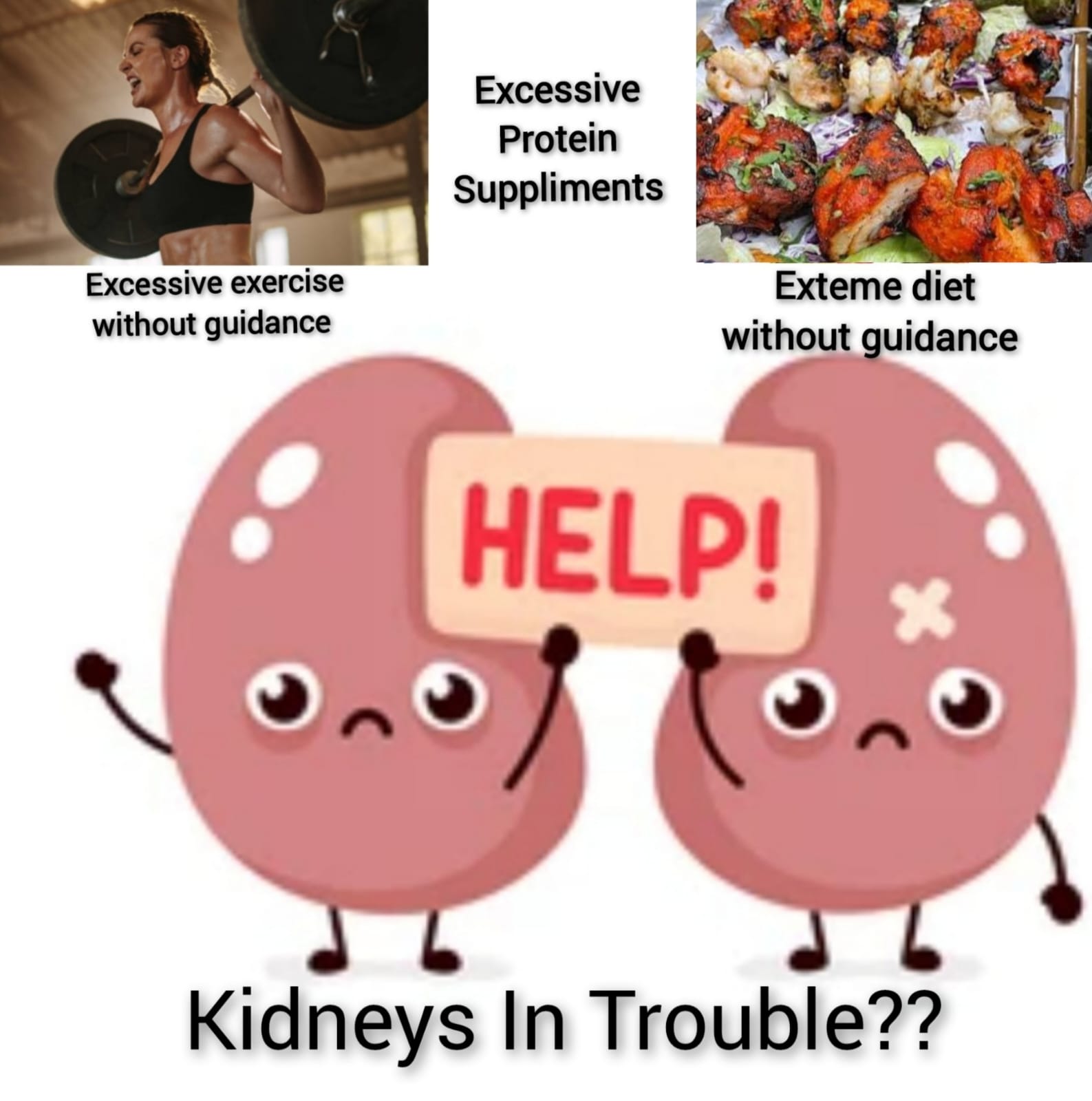
The Fitness Trap:
How Youth's quest for perfect bodies is silently damaging their kidneys
In an era where social media glorifies lean physiques with six-pack abs, young Indians are pushing their bodies to dangerous extremes in pursuit of the ‘perfect’ body. What began as a healthy desire for fitness has increasingly become a medical emergency. Nephrologists reporting an alarming surge in kidney problems among the 28-45 age group.
Dr. Himadri Shankar, a leading nephrologist, reveals a troubling trend: approximately 10% of his daily patients are young adults suffering from kidney complications directly linked to excessive fitness regimens. "These patients have been religiously hitting the gym for years, consuming what they believe are healthy foods in large quantities - green vegetables, citrus fruits, bananas, and dried fruits. However, their kidneys are paying the price for this well-intentioned but misguided approach," he explains. Healthy foods in large quantities need to be seen with caution as the high dose makes the poison.
The problem isn't fitness itself, but the dangerous misconception that ‘more is always better’. Young fitness enthusiasts are falling victim to aggressive marketing campaigns that promise rapid muscle gains through extreme workout routines and unregulated supplements.
While rhabdomyolysis (muscle breakdown that can damage kidneys) is relatively rare, it represents the extreme end of what can happen when exercise crosses the line from beneficial to harmful. This condition, where muscle tissue breaks down rapidly and releases myoglobin into the bloodstream, can overwhelm the kidneys' filtering capacity and be a contributing factor to acute kidney injury.
The key takeaway isn't to fear exercise but to understand that exercise, like any powerful tool, must be used judiciously. Regular exercise is essential for optimal health, cardiovascular function, muscle strength and mental wellbeing. The problem arises when a ‘more is better’ mentality drives people to extremes without proper guidance.
Hence, consulting an expert fitness coach becomes crucial when designing any exercise routine. A qualified trainer understands progressive overload principles, proper rest periods, exercise intensity management and exercise selection after an individual’s assessment.
An expert coach will:
• Design personalised workout plans based on individual fitness levels and goals
• Ensure proper warm-up and cool-down protocols
• Monitor training intensity and volume
• Recognise and act on early signs of overtraining
• Adjust routines based on recovery capacity
Apart from unchecked exercise, another concerning factor is the unregulated consumption of protein supplements. Young gym-goers are purchasing whey protein powders without appropriate consultation, often from dubious sources which sell at low prices during online sale festivals. These spurious products frequently contain harmful additives, heavy metals and even fungal contamination negatively impact kidney function over time. Citizens protein project: A self-funded, transparent, and concerning report on analysis of popular protein supplements sold in the Indian market, conducted by Cyriac Abby Phillips and colleagues, is an excellent read on these issues.
Protein is not the enemy - poor quality and excessive quantities are.
The human body requires protein for muscle repair and growth, but the source, purity and amounts matter significantly. Consuming 1-1.5 grams of protein per kilogram of body weight is absolutely fine and should be regulated further depending on exercise requirements. However, consuming 2-3x of the above figure can contribute to kidney woes.
For those who choose supplements, quality should never be compromised for cost. Established brands that have demonstrated consistent quality standards and transparent ingredient lists should be considered. Purchase from their own website instead of local shops or on online sale festivals.
The ideal strategy prioritizes whole food sources of protein - eggs, lean meats, dairy & preferably low-fat paneer, tofu etc. These natural sources provide not just protein but vitamins, minerals, phytonutrients and zoo nutrients that support overall health. Supplements should only fill gaps that cannot be met through a regular diet and not replace meals entirely.
A Critical Warning for Existing Kidney Patients:
For individuals with pre-existing kidney conditions, increasing protein intake without nephrology consultation can be life-threatening. Damaged kidneys struggle to process protein waste products and additional protein load can accelerate kidney function decline. Every kidney patient must work with their nephrologist to determine safe protein limits based on their specific condition and kidney function levels.
The Path Forward:
Exercise is Essential, Excess is Not
Exercise is essential for optimal health but excessive exercise is not.
The goal should be consistent, progressive, and sustainable fitness practices rather than extreme measures that promise quick results but deliver long-term damage.
True fitness focuses on not just muscle mass and low body fat, but optimal organ function, mental well-being and sustainable lifestyle practices. As we continue celebrating physical transformation stories on social media, we must also acknowledge the hidden casualties of the extreme fitness culture.
Moral of the story:
* Your kidneys are irreplaceable, so act wisely.
* Exercise regularly, but not excessively.
* Seek expert guidance,
* choose quality over shortcuts and remember that sustainable health is a marathon, not a sprint.
Kapil Jadhav,
Thane
(Advance Nutritionist & Exercise Coach, Fittr)

असा असेल तुमचा आजचा दिवस : राशिभविष्य सोमवार, २...
जुलै 27 2026
असा असेल तुमचा आजचा दिवस : राशिभविष्य बुधवार, २९ ए...
एप्रिल 29 2026
“उंदीर मारणाऱ्यांपासून बस चालवणाऱ्या: मुसहर मुलींच...
फेब्रुवारी 8 2026
शाकाहारींसाठी प्रथिनांनी समृद्ध ९ अन्नपदार्थ: आजच ...
डिसेंबर 29 2025

तंत्रज्ञानाच्या युगात पत्रकारितेचे महत्त्व

बदलत्या हवामानाचे आपल्यावर परिणाम

बदलत्या हवामानाचे आपल्यावर परिणाम